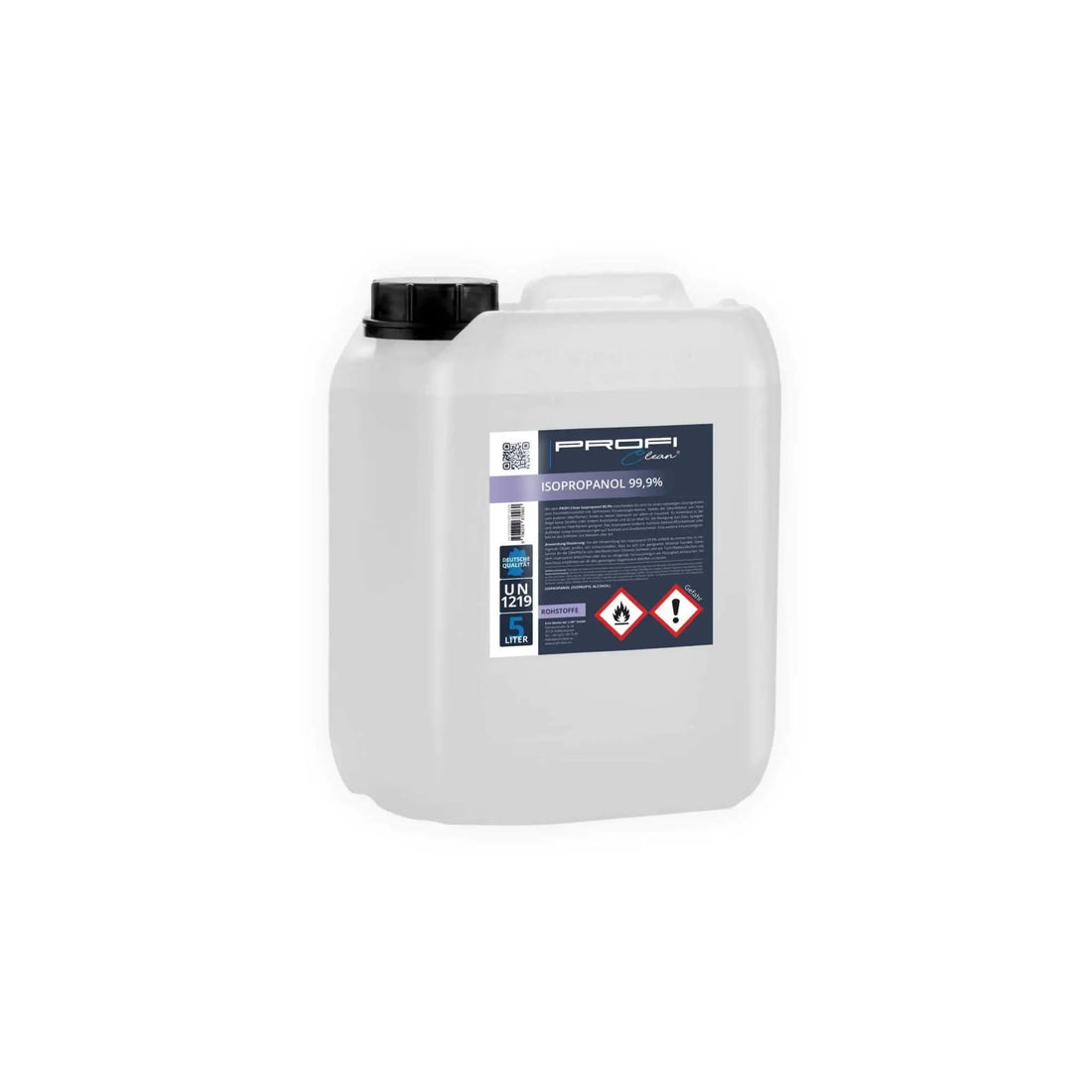


In short: Acetone is the strongest of the three and dissolves varnish, adhesives, and resin – but attacks many plastics. Isopropanol is the all-rounder for electronics, glass, and degreasing: It evaporates quickly and residue-free. Methylated spirits is denatured ethanol, cheap for windows and as fuel, but often leaves an odor.
The three solvents compared
| Acetone | Isopropanol | Methylated spirits | |
|---|---|---|---|
| Solvency | very high | medium to high | medium |
| Evaporation | very fast | fast, residue-free | fast, odor often remains |
| Plastics | attacks many | mostly compatible (test beforehand) | mostly compatible |
| Typical for | varnish, adhesive, resin, nail polish | electronics, glass, degreasing, label residue | windows, stove polish, spirit stoves |
Acetone: the strong one for tough cases
Acetone dissolves cured adhesives, paint splashes, resins, and construction foam residues. That is exactly what makes it tricky: Many plastics such as polystyrene, Plexiglas, or painted surfaces become dissolved or cloudy. Acetone is extremely flammable and evaporates so quickly that vapors can quickly accumulate in small rooms.
Isopropanol: the all-rounder
Isopropanol 99.9% is the medium of choice when it should be clean and without residue:
- Free circuit boards, contacts, and plug connections from flux and dust
- Clean displays, glasses, camera lenses, and glass streak-free
- Degrease tools, metal, and adhesive surfaces before gluing or painting
- Dissolve label and adhesive residues from glass and metal
- Clean print heads and 3D printing parts
For many applications, a mixture with 70% isopropanol is sufficient. How you make it is explained in the guide Isopropanol: 10 Applications.
Methylated spirits: cheap, but with an odor
Denatured spirits are ethanol that has been made undrinkable with denaturants. It is suitable for window cleaning water, for degreasing rough surfaces, and as fuel for spirit stoves. The denaturants can leave an odor and sometimes a light film – therefore, methylated spirits is not the first choice for electronics or optics.
What you must consider with all three
- All three are highly flammable: no open flames, no smoking, no sparks, good ventilation.
- Switch off electrical devices before cleaning and disconnect them from the power supply; let them dry completely before switching them on again.
- Test on an inconspicuous spot before use.
- Do not mix, store in the original container, and keep out of reach of children.
- Wear protective gloves during prolonged work – solvents degrease the skin.
Common mistakes
- Use acetone on painted plastic or the car – the surface will become matte or sticky.
- Use methylated spirits for displays – streaks and odor are the result.
- Pour solvents into unlabeled bottles.
- Bring soaked cloths near ignition sources. Let cloths dry outdoors spread out after use.
Which solvent for which case?
- Electronics, glass, optics: Isopropanol
- Degreasing before gluing or painting: Isopropanol
- Cured adhesive, varnish, resin: Acetone (test material beforehand)
- Windows, fuel for spirit stoves: Methylated spirits
Order Isopropanol 99.9% now at PROFI-Clean
Frequently Asked Questions
What is the difference between isopropanol and methylated spirits?
Isopropanol is a pure alcohol that evaporates residue-free. Methylated spirits is denatured ethanol and can leave an odor and a light film due to the denaturants.
Can I use isopropanol instead of acetone?
For grease, dust, and many adhesive residues, yes. For cured varnishes, resins, or superglue, acetone is stronger.
Does isopropanol attack plastic?
Most plastics tolerate isopropanol well. For Plexiglas, painted surfaces, and coatings, test beforehand on an inconspicuous spot.
Is isopropanol suitable for electronics?
Yes, high-percentage isopropanol is the standard for circuit boards and contacts. Disconnect the device from the power supply beforehand and let it dry completely.