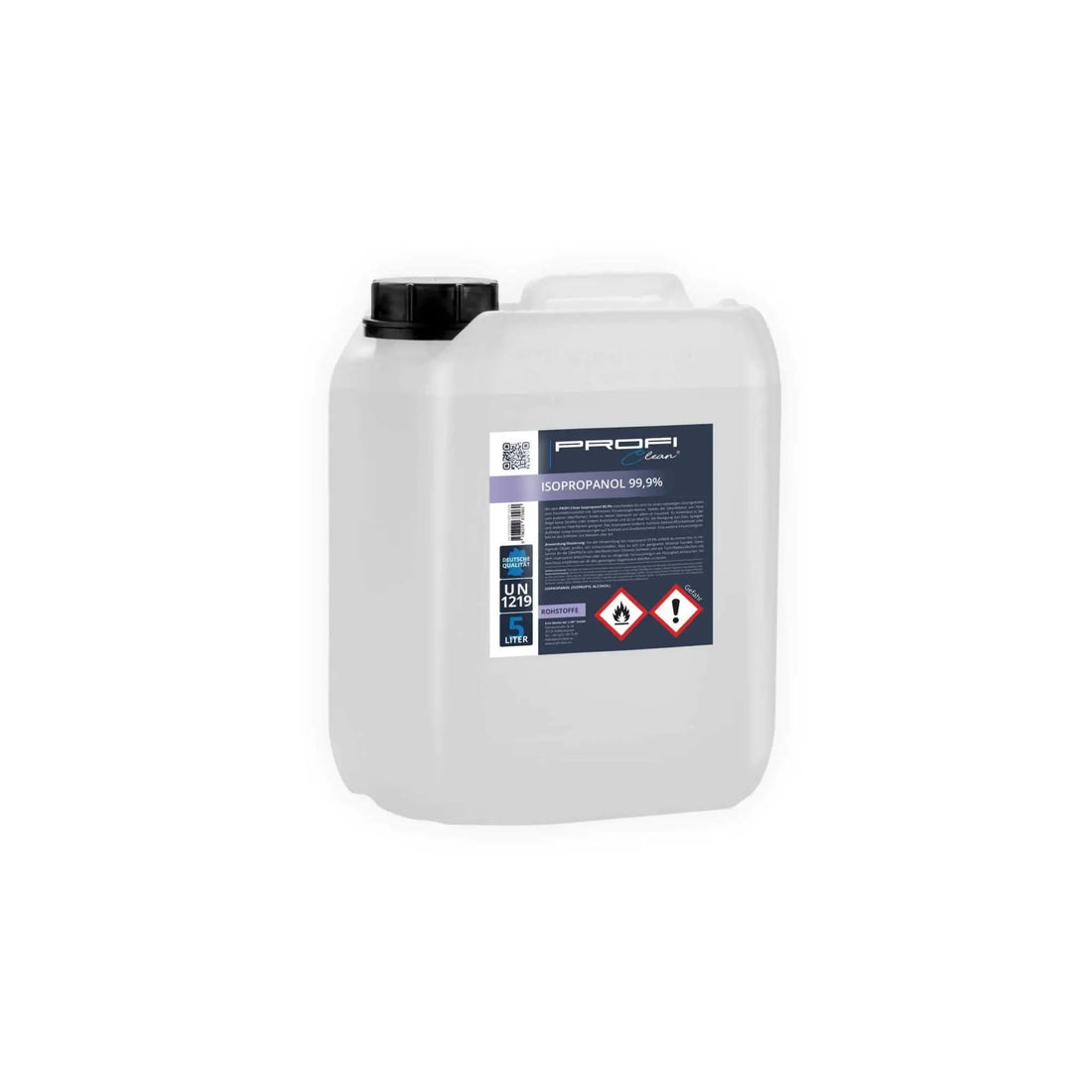


In short: Isopropanol (also isopropyl alcohol, 2-propanol or IPA) is a fast-evaporating alcohol that dissolves grease, oil, adhesive and resin residues and leaves almost no residue. The 99.9% variant is particularly suitable for electronics and degreasing. For many surface cleaning tasks, it is diluted to around 70%.
10 applications for isopropanol
- Electronics and circuit boards: Flux residues after soldering, dirty contacts and plugs. Disconnect the device from the power supply beforehand.
- Degreasing before gluing: Adhesive surfaces become grease-free, and adhesive tapes and glues hold better.
- Degreasing before painting: Remove fingerprints and oil from metal or wood before applying primer or paint.
- Labels and adhesive residues: Let it work on a soaked cloth and wipe it off.
- 3D printer bed: Degrease the print plate so that the first layer adheres cleanly.
- Tools and metal parts: Dissolve oil, grease and resin from tools, saw blades or drill bits.
- Bicycle: Degrease brake discs and rim edges.
- Glass and mirrors: When diluted, isopropanol cleans with minimal streaking because it evaporates quickly.
- Felt-tip pens and ink: On smooth, non-sensitive surfaces such as glass, metal or ceramics.
- Base material for your own cleaning solutions: Diluted with distilled water as a surface cleaner.
99.9% or 70%?
Isopropanol 99.9% is almost water-free. It evaporates very quickly and leaves practically no moisture – that is why it is the first choice for electronics and degreasing. A 70% solution evaporates more slowly and therefore works longer on the surface. This mixture is common for many general cleaning tasks.
Mixing table: Diluting isopropanol
| Target | Isopropanol 99.9% | Distilled water |
|---|---|---|
| approx. 70% (surface cleaning) | 700 ml | 300 ml |
| approx. 50% (glass, mirrors) | 500 ml | 500 ml |
Use distilled water so that no limescale stains are formed. The values are approximations – that is completely sufficient for household use. Clearly label the mixing bottle.
Where you should not use isopropanol
- Acrylic glass (Plexiglas) and some other plastics can become cloudy or crack.
- Painted, varnished or waxed surfaces can be dissolved.
- Coated displays and eyeglass lenses only if the manufacturer allows it.
- Leather, rubber and sensitive textiles can dry out.
If in doubt, always test on an inconspicuous spot first.
Working safely with isopropanol
- Isopropanol is highly flammable: No open flames, sparks or hot surfaces nearby, do not smoke.
- Ensure fresh air – the vapors can cause drowsiness and lightheadedness.
- Avoid eye contact, wear protective gloves and safety goggles when handling larger quantities.
- Do not switch electronics back on until everything has completely dried.
- Store the container tightly closed, in a cool place and out of reach of children.
Which container size is right?
For occasional applications, 1 liter is sufficient. If you work regularly in a workshop, with electronics or 3D printing, the 5-liter container or the multi-pack is significantly cheaper per liter. You can see the basic price of each variant directly in the shop.
Order PROFI-Clean Isopropanol 99.9% now
Frequently asked questions
Is isopropanol the same as isopropyl alcohol?
Yes. Isopropanol, isopropyl alcohol, 2-propanol and IPA all refer to the same substance.
Can I use isopropanol instead of methylated spirits?
Yes, for many cleaning and degreasing tasks. Isopropanol is not intended as fuel for methylated spirits stoves or ethanol fireplaces.
How do I mix 70% isopropanol?
Mix approximately 700 ml of isopropanol 99.9% with 300 ml of distilled water.
Is isopropanol suitable for screens?
Only if the manufacturer allows it. Many displays have sensitive coatings. Then apply isopropanol sparingly to a microfiber cloth, never spray it directly.
How long does isopropanol last?
If kept tightly closed and stored in a cool place, it remains usable for a long time. If left open, it evaporates and absorbs moisture from the air.