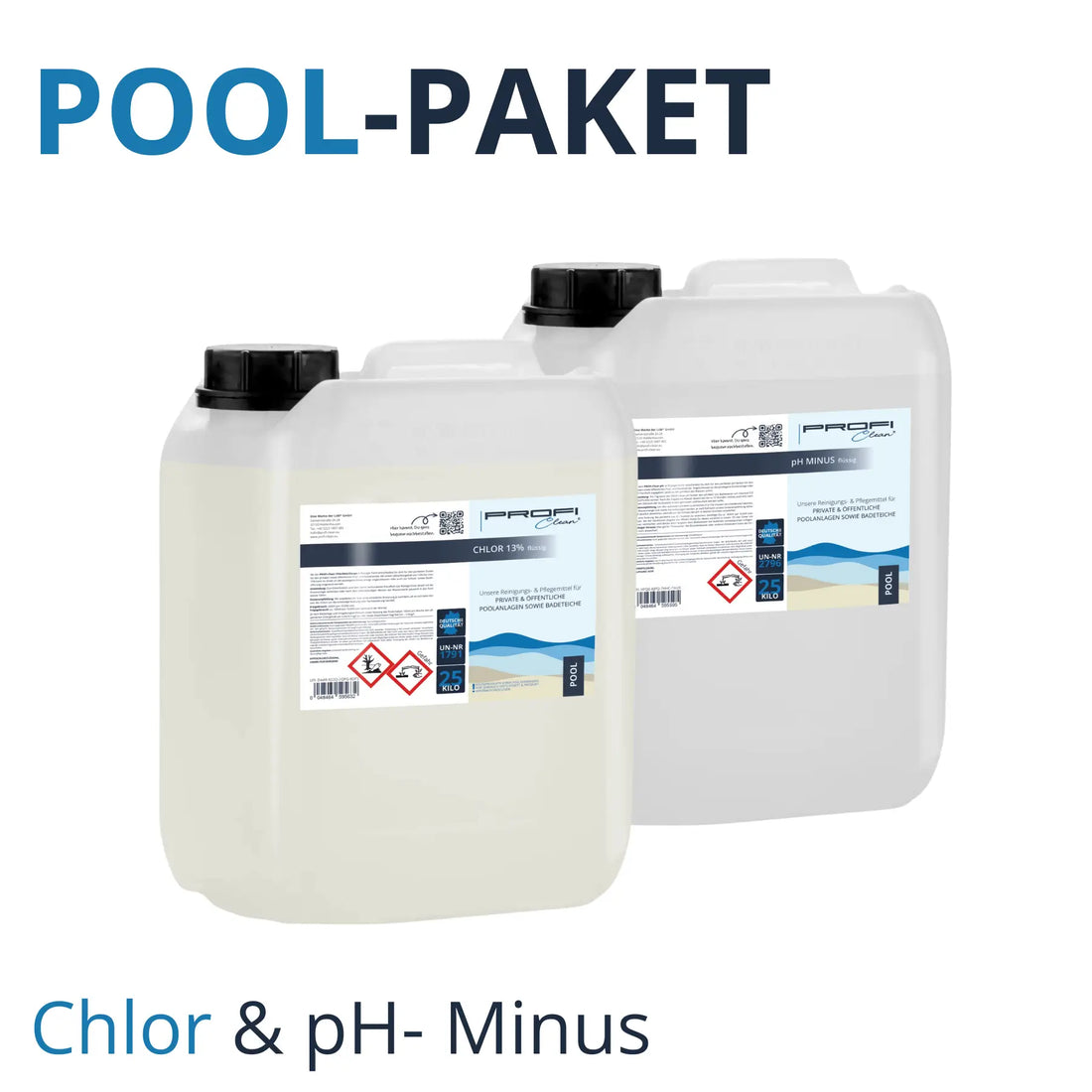


The pH level – the foundation of healthy water quality
Whether pool, hot tub or swimming pond – crystal-clear water starts with the right pH level. If it is out of balance, even the best disinfectant will only work to a limited extent. Excessively high pH levels lead to algae growth, limescale deposits and skin irritation. To counteract this, many operators rely on pH reducers – specifically in liquid form. In this comprehensive article, we explain why liquid pH-minus offers clear advantages over granules.
What is liquid pH reducer (pH-minus)?
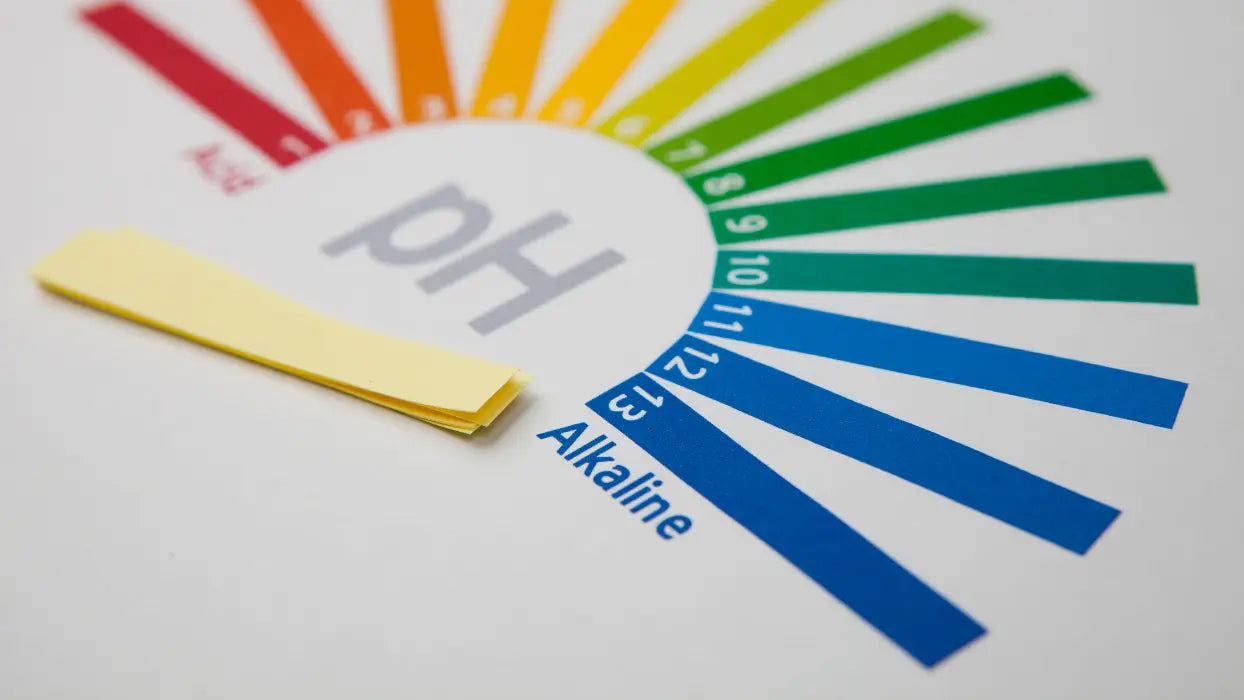
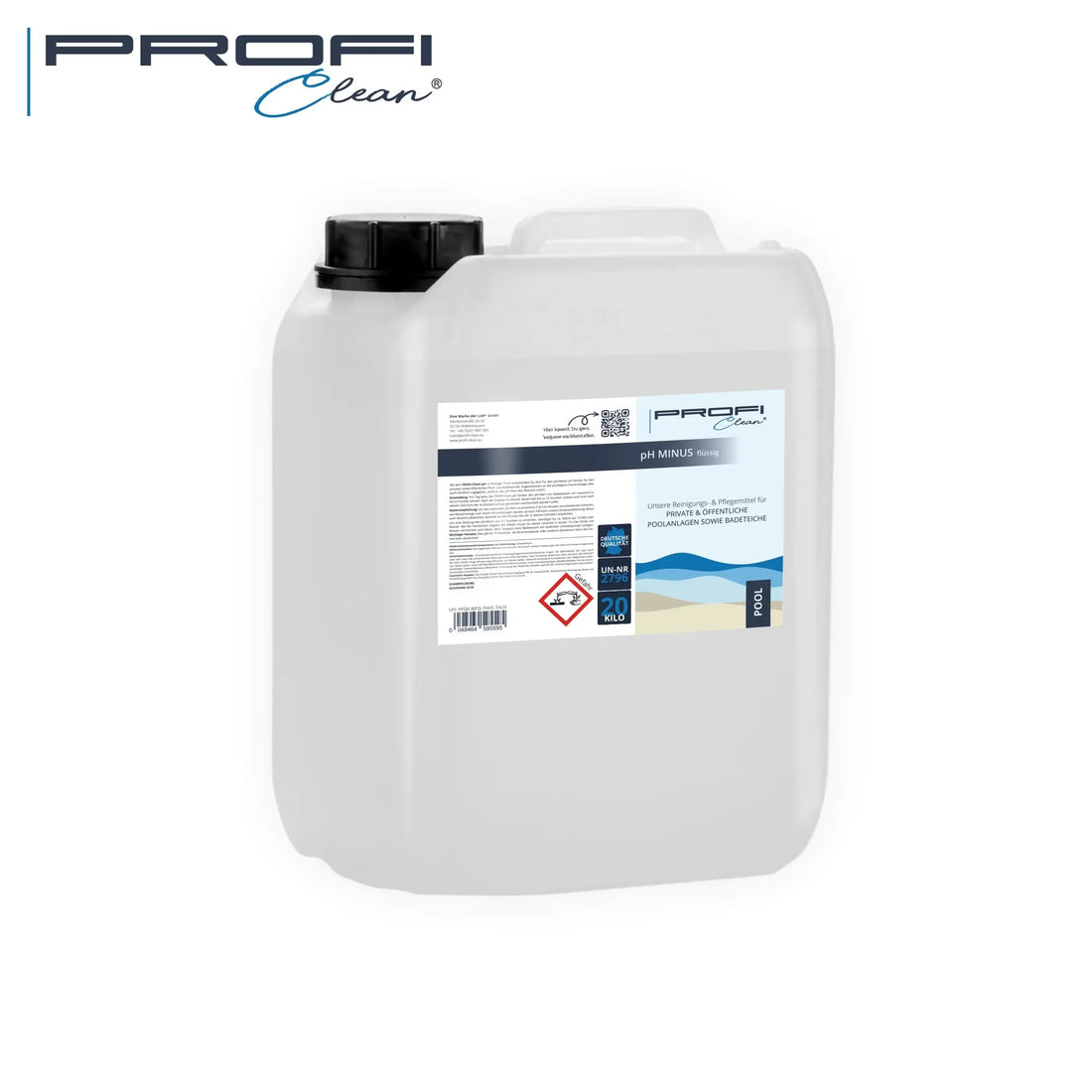
Liquid pH reducer is usually based on sulfuric acid (H₂SO₄) or hydrogen sulfide acid in various concentrations – often 14–38%. It is dosed directly into the water and lowers the pH level to the optimal range between 7.0 and 7.4.
Typical features:
-
Concentration: 14–38%
-
Chemical basis: Sulfuric acid or sodium bisulfate in liquid form
-
pH reduction: Depending on the dosage, by 0.1 to 1.0 pH levels per m³
-
Application: Manually or automatically via a dosing system
1. Why is the pH level so important?
Optimal effect of chlorine and co.
Disinfectants such as liquid chlorine only achieve their full effect at a stable pH level. At a pH level above 7.6, chlorine loses up to 80% of its effect – and that means: higher chemical usage, poorer water quality.
Protection for equipment and surfaces
An excessively high pH level promotes:
-
Limescale deposits in pipes and heat exchangers
-
Clogged nozzles
-
Dulling of liners and coatings
A persistently incorrect pH level can thus cause maintenance costs and reduce service life.
Pleasant swimming experience
A balanced pH level protects:
-
The skin and mucous membranes of swimmers
-
The eyes from irritation
-
The water quality from cloudiness
2. Advantages of liquid pH reducer over granules
Precise dosing possible
Liquid pH reducers can be dosed precisely – either manually or fully automatically via a dosing system. This prevents overdosing and ensures consistent water quality.
Fast reaction time
Liquid pH-minus works immediately after addition. Unlike granules, there is no waiting time for dissolution. This is particularly advantageous in acute situations (e.g. high pH level after heavy rain).
Ideal combination with automatic pool control
Modern pool controls – e.g. from PROFI-Clean.eu – continuously measure the pH level and dose liquid pH reducer with pinpoint accuracy. This means:
-
No manual readjustment
-
Stable pH level – day and night
-
Lower chemical consumption
Fewer residues
Unlike granules, using liquid pH reducer leaves no insoluble residues that could settle on the bottom or in the filtration system. Ideal for all types of pools and hot tubs.
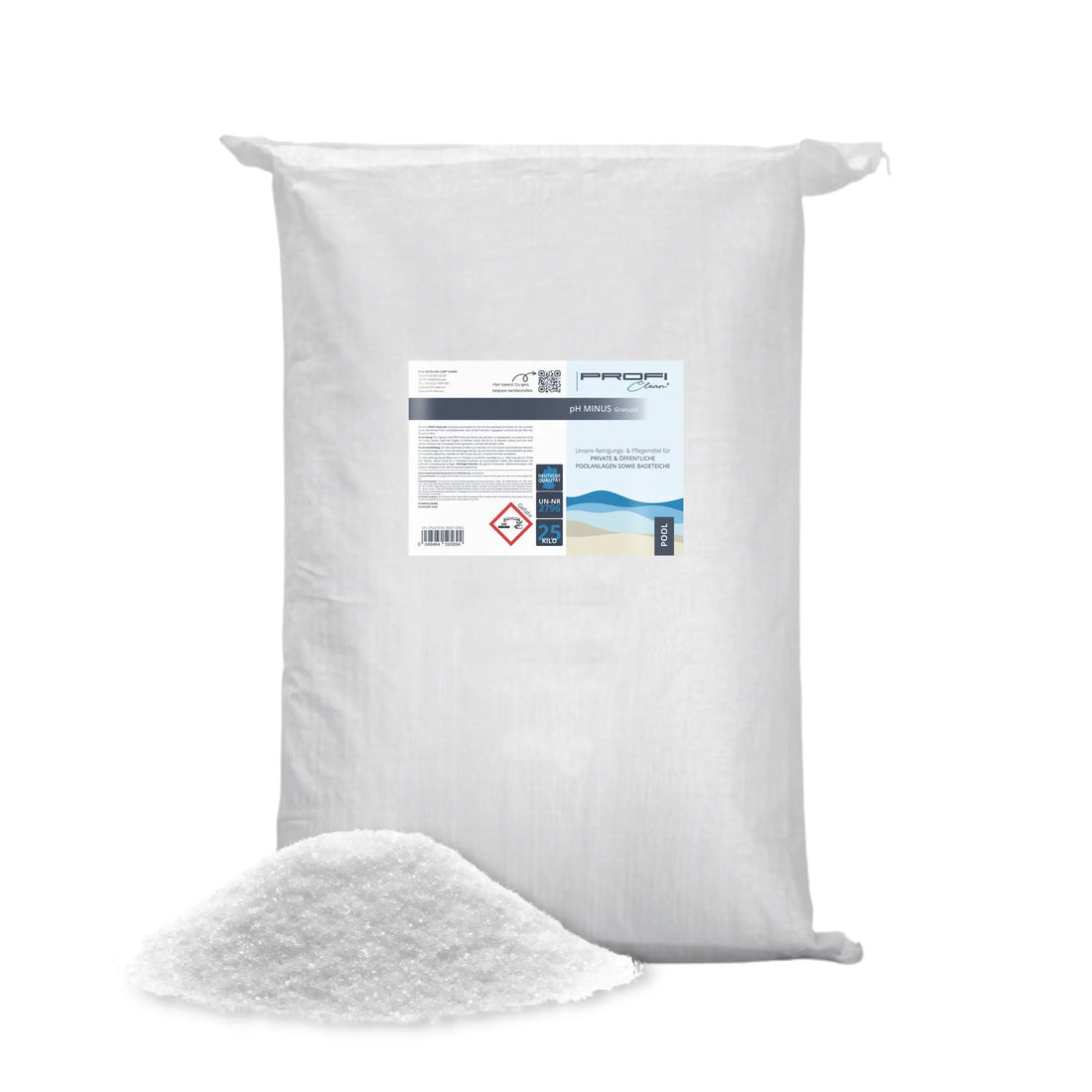
Are you convinced by pH granules? Then you will also find that in our shop: exactly here.
3. Application and dosage: how it works
Manual application
For smaller pools, liquid pH reducer can also be added by hand. The pH level should be measured precisely beforehand (e.g. with a pool tester or digital measuring device).
Guideline:
Approximately 10–30 ml per m³ of water to lower the pH level by 0.1–0.3 points.
Example:
For a 30 m³ pool with a pH of 8.0 (target: 7.2), approx. 900 ml of pH reducer would be required (depending on concentration).
Important: After dosing, circulate the water thoroughly – for at least 1 hour.
Automated dosing
The best method – especially for medium to large pools – is automatic dosing. Devices such as pH-Control Pro or dosing pumps measure and regulate the pH level fully automatically.
Advantages:
-
No more daily testing and adjusting
-
Consistent water quality
-
Can be combined with chlorine dosing
4. For which pools is liquid pH reducer suitable?
Private pool
Whether a steel-walled pool or an in-ground concrete pool – liquid pH reducer is ideal for private use. Especially in combination with semi-automatic or automatic dosing systems.
Hot tub
Hot tubs have a more unstable pH level due to high water temperatures. Liquid pH reducer can counteract this quickly and effectively.
Note: Regularly check hot tub water for alkalinity and pH level – small volumes of water react more sensitively to dosing fluctuations.
Commercial swimming pools
Liquid pH reducer has long been standard in public or commercial facilities. Large containers (e.g. 25 or 60 liters) can be stored space-efficiently and dosed efficiently via central control units.
5. Safety and storage
Safety instructions for handling
Since pH reducers are acid-based, caution is advised:
-
Always work with protective gloves and safety goggles
-
Do not mix with other chemicals
-
Always add to water – never pour water into acid!
Storage
-
Store in a cool, dry place
-
Keep away from children and animals
-
Use the original container
-
Do not store in metal containers
6. Sustainability and environmental aspects
Liquid pH reducer is environmentally friendly when used correctly. It is neutralized in water and has no negative impact on people or the environment – provided it is dosed correctly.
What makes it sustainable?
-
No solid residues
-
No risk to soil or plants when handled correctly
-
Reduced consumption through automation
7. Common mistakes in pH regulation (and how to avoid them)
| Mistake | Consequence | Solution |
|---|---|---|
| Ignoring excessively high pH levels | Cloudy water, poor chlorine effectiveness | Test regularly and counteract in good time |
| Granules not dissolved correctly | Residues in the pool | Use liquid pH reducer |
| Unsuitable dosing method | Fluctuating pH levels | Use automatic dosing |
| Dosing "by feel" | Over- or under-dosing | Exact calculation according to manufacturer specifications |
| Only checking the pH level occasionally | Fluctuations and damage to equipment | Test at least twice a week |
8. FAQ – Frequently Asked Questions
Is liquid pH reducer dangerous?
Only if handled improperly. With gloves and careful dosing, use is safe and trouble-free.
How quickly does liquid pH minus work?
As a rule, within 15–30 minutes, provided the water is well circulated.
Do I need to adjust the chlorine when I lower the pH?
No – on the contrary: With the correct pH level, chlorine works better. So it is more of an optimizer.
Conclusion: Liquid pH reducer – the key to stable water care
A correctly adjusted pH level is the basis for clean, hygienic water. Liquid pH minus offers clear advantages over other forms:
✅ Fast action
✅ Precise dosing
✅ Ideal for automation
✅ No residue
✅ Safe when used correctly
For everyone who relies on convenient and reliable pool care, liquid pH reducer is the ideal choice.