

In short: Before the nights get frosty, set the pH level to 7.0 to 7.4, shock the water with chlorine once more, lower the water level below the return jets, and drain the pump, filter, and pipes. A well-fitting cover keeps leaves and light out. If you do this properly, you'll save yourself a lot of work in the spring with cloudy or green water.
When is the right time?
The ideal time is when the water temperature permanently drops to around 12 to 15 °C. Then algae hardly grow. If you wait too long, pipes and equipment are at risk of frost damage. If you do it too early, the water is still warm enough for algae to grow under the cover.
Step by step: winterize your pool
- Clean thoroughly: Rake off leaves and dirt, vacuum the floor and walls, and clean the waterline. Whatever remains in the pool will decompose over the winter.
- Measure water values: With pool test strips, you can check the pH level, chlorine, and alkalinity in a few seconds.
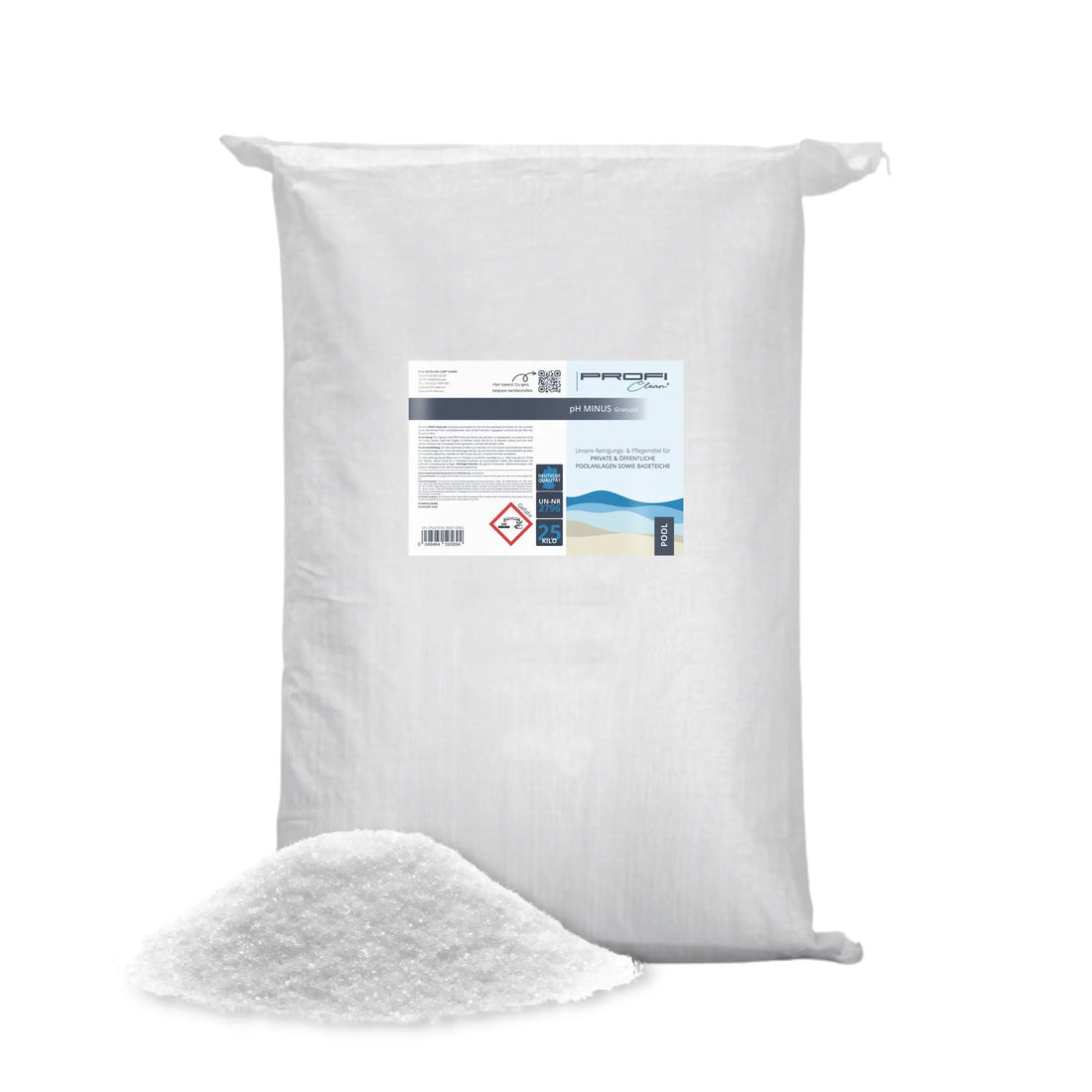
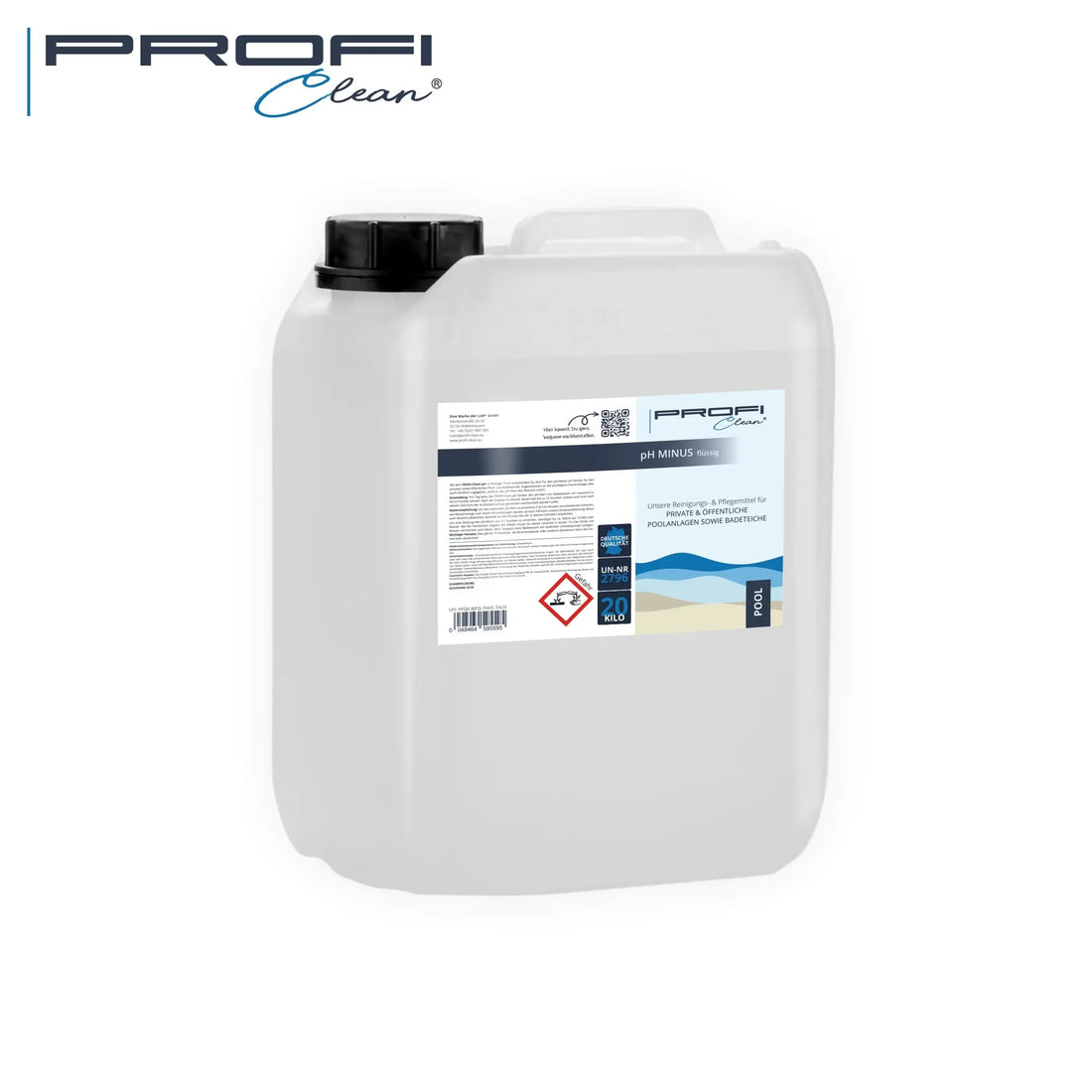
- Set the pH level: If the value is above 7.4, lower it with liquid pH-Minus or pH-Minus granules. Dose in small steps and measure again after a few hours. Chlorine only works reliably at the right pH level.
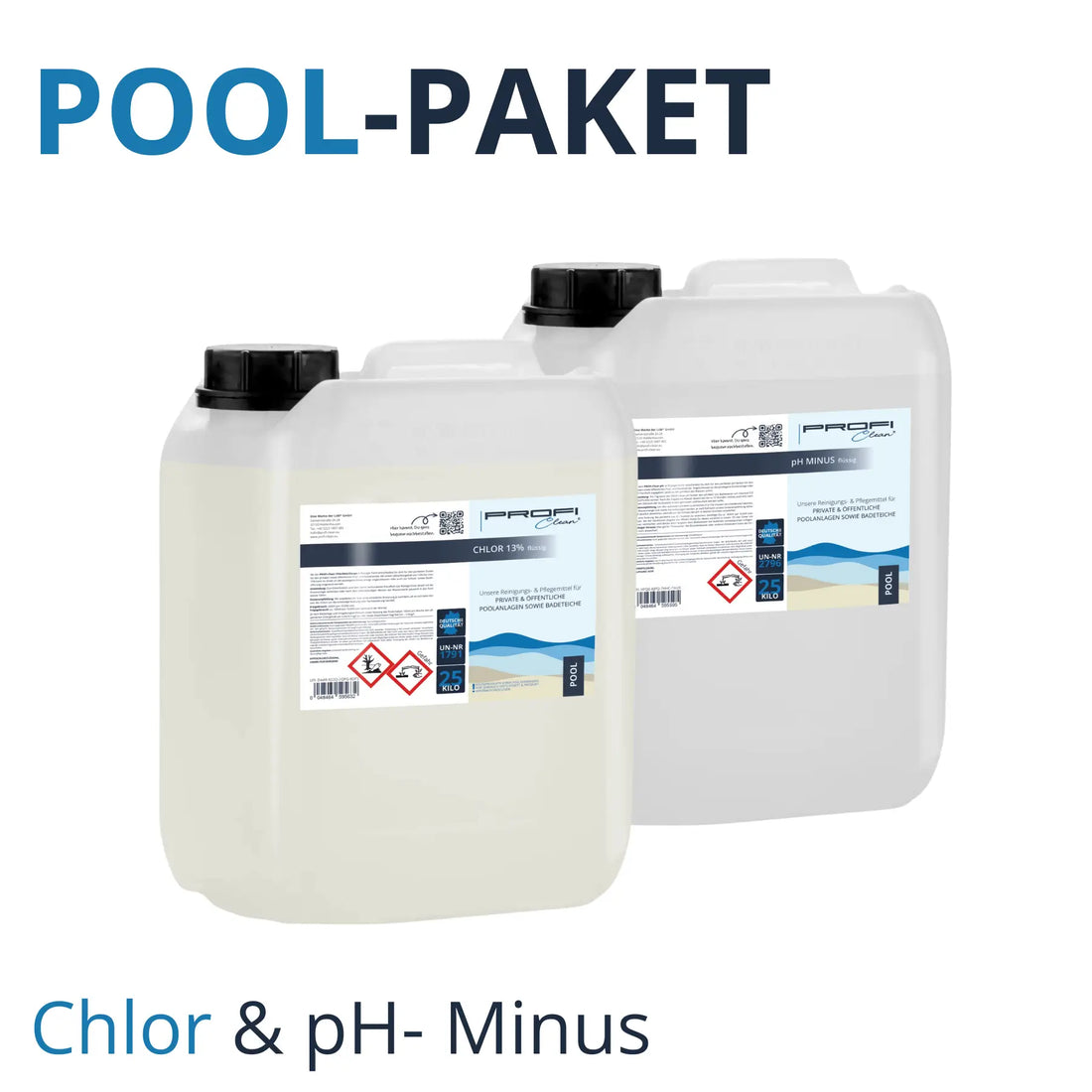
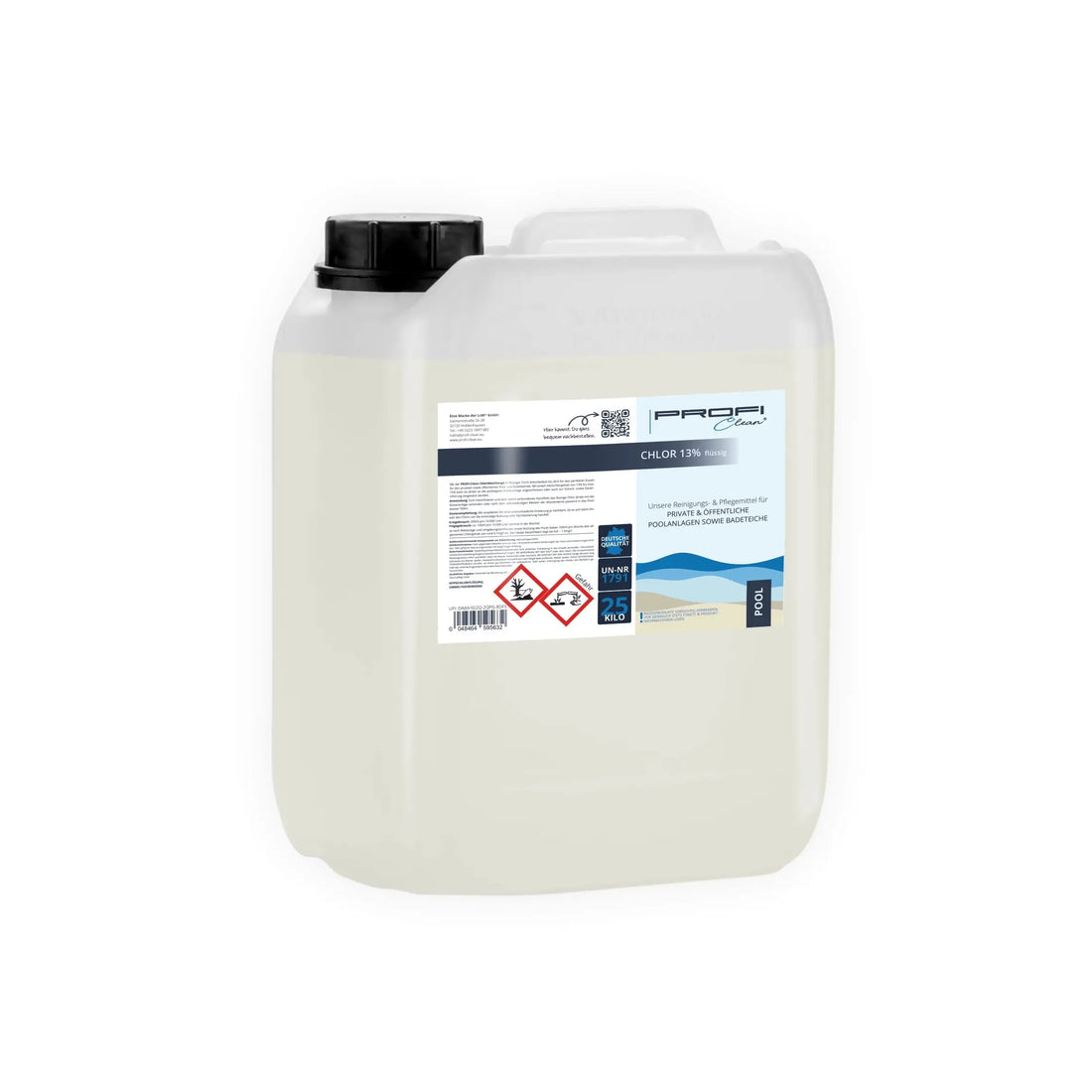
- Shock chlorination: A few days before winterizing, add a higher dose of chlorine cleaner according to the instructions on the label and let the filter system run. The pool package of chlorine cleaner and pH-Minus is practical.
- Lower the water level: Lower the water to about 10 to 20 cm below the skimmer and return jets. Do not drain vinyl liner pools completely: The water stabilizes the walls and floor.
- Drain the equipment: Drain the pump, filter, heat pump, and pipes. Store small devices away from frost, open the valves, and seal the skimmer and jets with winter plugs.
- Insert an ice pressure pad: A winter float or ice pressure pad relieves the pressure when the water freezes.
- Cover: A sturdy, light-tight winter cover keeps leaves, dirt, and sunlight out.
Typical mistakes when winterizing
- Chlorine without pH adjustment: If the pH level is too high, the effect is wasted.
- Draining the water completely: Many pool types are at risk of deformation.
- Residual water in pipes: Even a small amount of water that freezes can burst pipes and pump housings.
- Transparent cover: Light promotes algae growth – so you'll be waiting for green water in the spring.
Handle pool chemicals safely
Never mix chlorine cleaner and pH-Minus; add them to the water separately and with time between applications. Wear protective gloves and goggles and follow the instructions on the label. Store residues in a cool, dark, sealed place out of reach of children – not in frost.
And in the spring?
Remove the cover, refill the water, reconnect the equipment, measure the water values, and re-chlorinate if necessary. You can read how to react if the water has turned green in the guide Pool water turns green – what to do?
Order pool care products from PROFI-Clean now
Frequently asked questions
When should I winterize my pool?
As soon as the water temperature permanently drops to around 12 to 15 °C and before the first frosty nights arrive – usually between late September and early November.
Do I have to drain the pool water for the winter?
Not for most pools. Only lower the water level below the skimmer and return jets. The remaining water stabilizes the liner and walls.
What is the correct pH level before winterizing?
Between 7.0 and 7.4. Chlorine works best in this range. If the value is too high, lower it with pH-Minus.
Do I need chlorine over the winter?
Shock chlorination before covering is usually sufficient. In mild winters, checking in January or February can be useful.