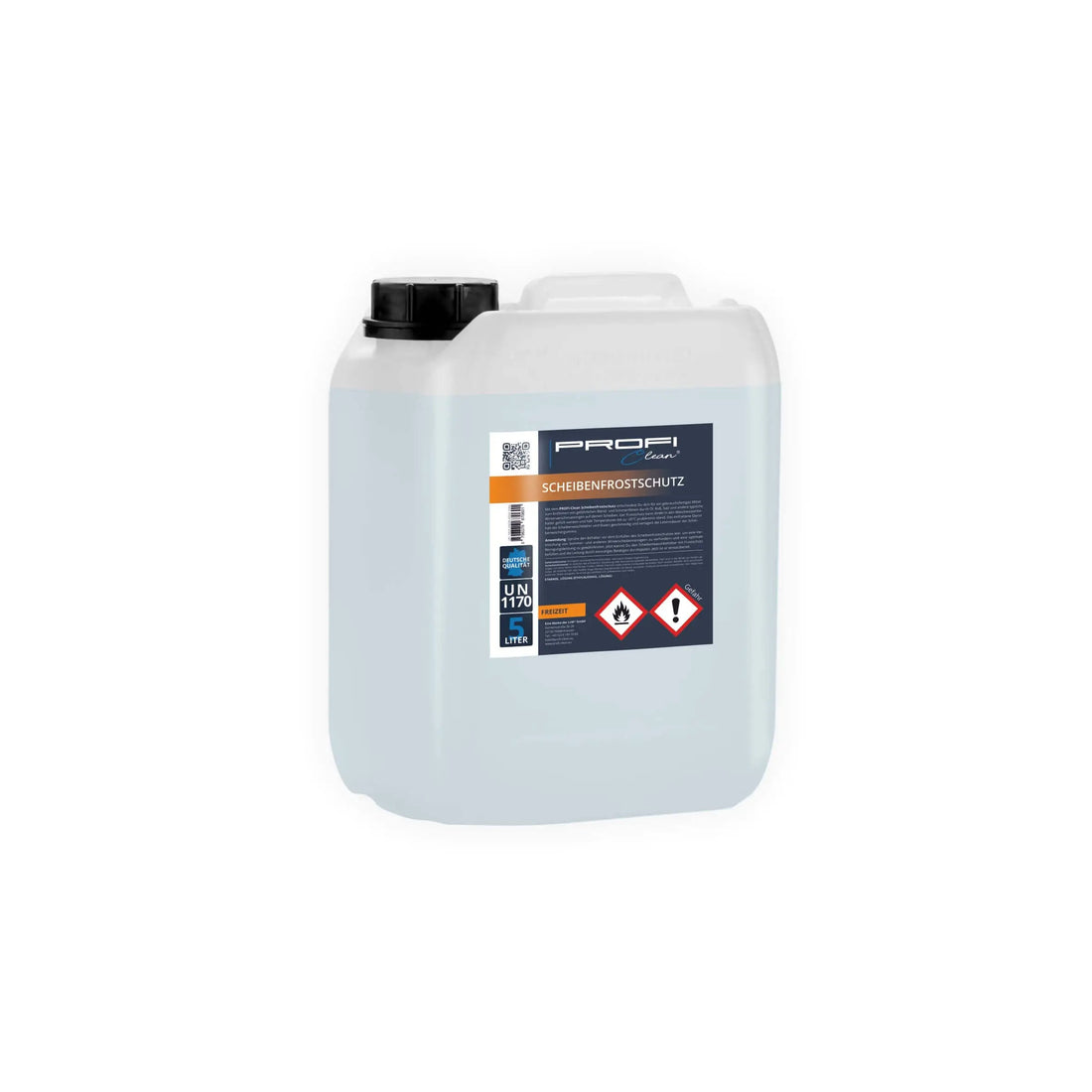


In short: Fill the washer fluid reservoir with antifreeze before the first night frosts arrive – not only when the nozzles are already frozen. Empty the reservoir as much as possible beforehand so that summer washer fluid does not dilute the antifreeze. Ready-to-use windshield antifreeze down to -20 °C goes into the reservoir undiluted.
Why antifreeze in the washer fluid is so important
If the washer fluid freezes, the nozzles and hoses become blocked. In the worst case, the reservoir or pump can burst. On top of that, there is the visibility: road salt, slush, and spray form a greasy film on the windshield that you cannot remove without a working washer system.
How to make the washer system winter-ready
- Empty the reservoir: Use up summer washer fluid or insect cleaner as much as possible. Every liter of residual water lowers the antifreeze protection.
- Fill with antifreeze: Fill ready-to-use windshield antifreeze undiluted up to the mark.
- Flush through: Let the washer system run for a few seconds until antifreeze comes out of all the nozzles. For vehicles with headlight or rear window washers, activate those as well.
- Check the wiper blades: Replace cracked or streaking rubber. A splash of windshield de-icer releases frozen wipers without damaging the rubber.
- Refill: Keep the container in the trunk or garage within easy reach. In winter, consumption is significantly higher than in summer.
Ready-to-use or concentrate?
Depending on the expected frost, you must mix concentrate with water – the mixing ratio is on the label. Ready-to-use antifreeze is already mixed. If you dilute it, the protection decreases: instead of freezing at -20 °C, the mixture may freeze much earlier. The advantage of ready-to-use antifreeze: no calculations, no measuring, no risk from incorrect mixing.
The washer system is already frozen – what to do?
- Let the car thaw in a warm garage or for some time with the heater running.
- Do not let the pump run continuously against a frozen system – it can overheat.
- Do not pour hot water over the windshield or nozzles: the temperature difference can cause the glass to crack.
- As soon as everything has thawed, empty the reservoir as much as possible and refill with antifreeze.
Clear visibility in the morning: de-icer instead of scraping frenzy
You will clear a frozen windshield faster if you spray windshield de-icer on it beforehand. It melts the ice layer so that it can be easily pushed off with a scraper – without prolonged scraping and with fewer scratches in the glass. Tip: Do not store the de-icer in the car, but keep it within easy reach in a jacket pocket or by the front door. If frost is forecast, a cover over the windshield also helps.
How much antifreeze do I need?
In most regions of Germany, protection down to -20 °C is sufficient. Those who live in high-altitude areas or drive into the mountains in winter should keep an eye on the temperature rating on the label and mix concentrate accordingly stronger.
Safety
Antifreeze should not be within reach of children or stored in beverage bottles. Keep the container tightly closed, wipe off splashes on the paintwork, and follow the instructions on the label. You can find more tips for the cold season in our guide Safe Driving in Winter.
Order winter products for your car now
Frequently Asked Questions
When should I add antifreeze to the washer fluid?
Ideally in October, at the latest before the first night frosts. If the system is already frozen, it will be significantly more difficult.
Can I dilute ready-to-use windshield antifreeze?
No. It is already formulated for the stated frost protection. Additional water will cause the mixture to freeze earlier.
Can I mix antifreeze and summer washer fluid?
Avoid it as much as possible. Empty the summer washer fluid beforehand. Residual water dilutes the antifreeze.
Does windshield de-icer also help with frozen wipers?
Yes. Spray on briefly, let it work, and carefully release the wipers. Do not pull them off by force, otherwise the rubber will tear.