

As the days get shorter, many people bring their paraffin heater out of the basement – for the workshop, garden shed, conservatory, or as emergency heating during a power outage. For the heater to heat reliably, efficiently, and as odorlessly as possible, three things are essential: the right paraffin, the right handling of the device, and safe storage. Here you will find an overview of the most important tips.
Which paraffin for the paraffin heater?
For wick-type paraffin heaters and paraffin lamps, you need pure, low-sulfur paraffin. Low-sulfur paraffin burns more cleanly, produces less odor, and leaves fewer deposits on the wick. Cheap mixtures or incorrect fuels, on the other hand, can cause soot, a strong odor, and a quickly carbonized wick.
- Do not fill the paraffin heater with gasoline, diesel, or heating oil – this is dangerous and can damage the device.
- Do not mix fuels, e.g., paraffin with lamp oil or bioethanol.
- Always follow the manufacturer's instructions for your heater.
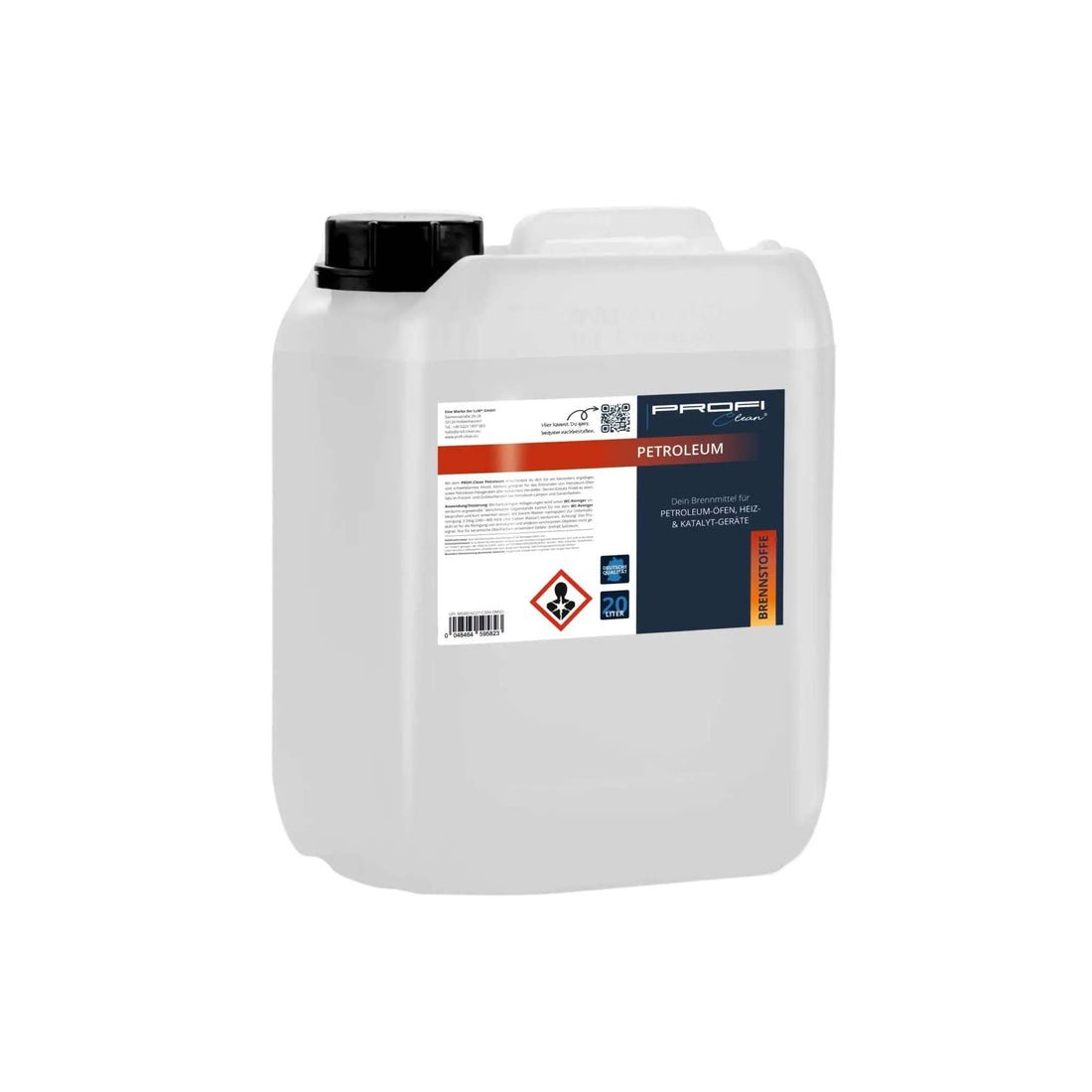
Our PROFI-Clean low-sulfur paraffin is available in 1-, 5-, and 20-liter canisters.
How much paraffin does a paraffin heater consume?
Consumption depends on the heater's power and the set level. As a rough rule of thumb: A heater with around 2.5 kW of heating power consumes approximately 0.25 liters per hour on full power. At 5 hours a day, that is a good 1.2 liters daily – a 20-liter canister will then last about two weeks. You will find the exact value in your device's user manual.
Tip: If you heat regularly, the 20-liter canister is significantly cheaper per liter than small containers. For occasional use or for paraffin lamps, 1 or 5 liters are sufficient.
Safety: How to use your paraffin heater correctly
A paraffin heater burns fuel in the room and consumes oxygen in the process. Therefore:
- Ventilate regularly – ideally, briefly ventilate with a cross-breeze every hour.
- Do not operate in small, enclosed rooms, bedrooms, enclosed tents, caravans, or vehicles. When camping, only heat in the well-ventilated porch tent and never in the sleeping area.
- Place a CO detector (carbon monoxide alarm) in the room.
- Never leave the heater unattended or let it run overnight.
- Keep your distance from curtains, furniture, and other flammable materials.
- Keep children and pets away from the heater.
Refilling paraffin correctly
- Only refill when the heater is switched off and cooled down.
- Ideally outdoors or in a well-ventilated room.
- Use a pump or a filling tap – this way nothing spills.
- Wipe up spilled paraffin immediately before relighting the heater.
Storing paraffin correctly
- Store in the well-sealed original canister.
- Store in a cool, dry place protected from direct sunlight, e.g., in the basement or garage.
- Keep away from ignition sources, heaters, and open flames.
- Store out of reach of children.
- Use up any remaining stock from the previous season first if possible. Old or contaminated paraffin can smell stronger.
If the paraffin heater smells or produces soot
A slight odor when lighting and turning off is normal. If the heater smells strongly or produces soot, it is usually due to one of these points:
- Incorrect or contaminated fuel – switch to low-sulfur paraffin.
- Wick too high or carbonized – adjust the wick correctly, burn it free if necessary, or replace it.
- Too little fresh air – ventilate more often.
- Dirty heater – clean after the season and maintain according to the instructions.
Checklist for the heating season
- Check the heater for damage and clean it
- Check the wick
- Get fresh, low-sulfur paraffin
- Test the CO detector
- Choose a safe location with enough distance
You will find all fuels for the cold season in our Fuels category. Please always follow the safety instructions on the label and in your heater's user manual.
You can find out which canister size is worth it and what paraffin costs per liter in the guide Buying paraffin: Canister sizes, price per liter, and storage.